BentoLabs · Product & design
Agent37
An agent to fix other agents.
- Product
- Agent investigation
- Interface
- Natural language
- Built at
- BentoLabs
A team can have millions of traces and still struggle to answer a simple question: why does this keep happening?
At BentoLabs, we built Agent37 to make that investigation a conversation. Ask a question across traces, analyse the issues appearing in them, and explore possible ways to fix the underlying agent. The starting point was the question a person already had.
Give the question something to work with
“Why is this issue repeating for these users?” sounds specific until you have to tell the system which issue and which users you mean. That small gap between a question and its context became an important part of the interface.
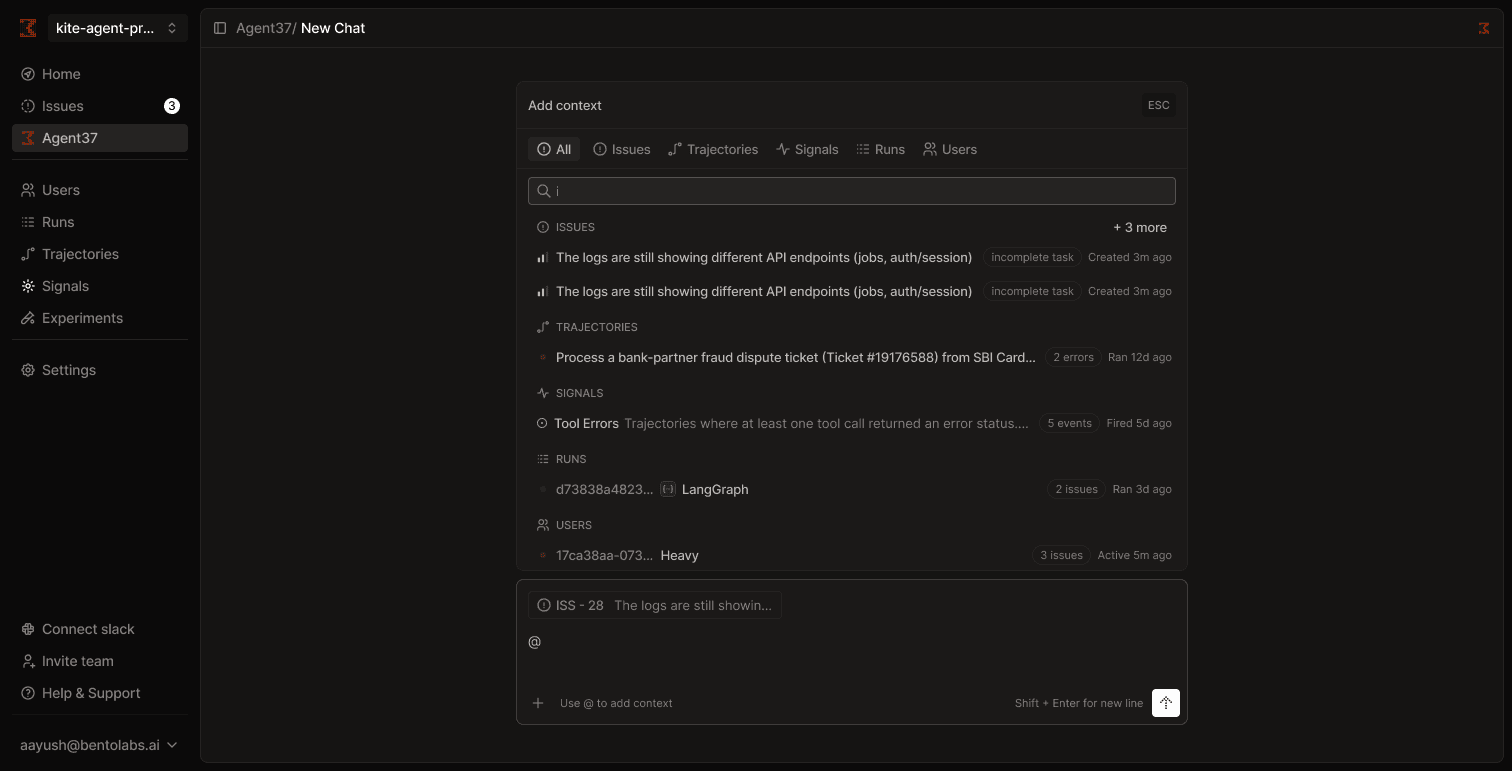
The composer lets someone bring issues, trajectories, signals, runs, and users into the same conversation. Typing @ opens a context search. Categories narrow the search; a result’s details help the person recognise the right item. Selected items remain visible as chips alongside the question.
Keep the investigation close to the work
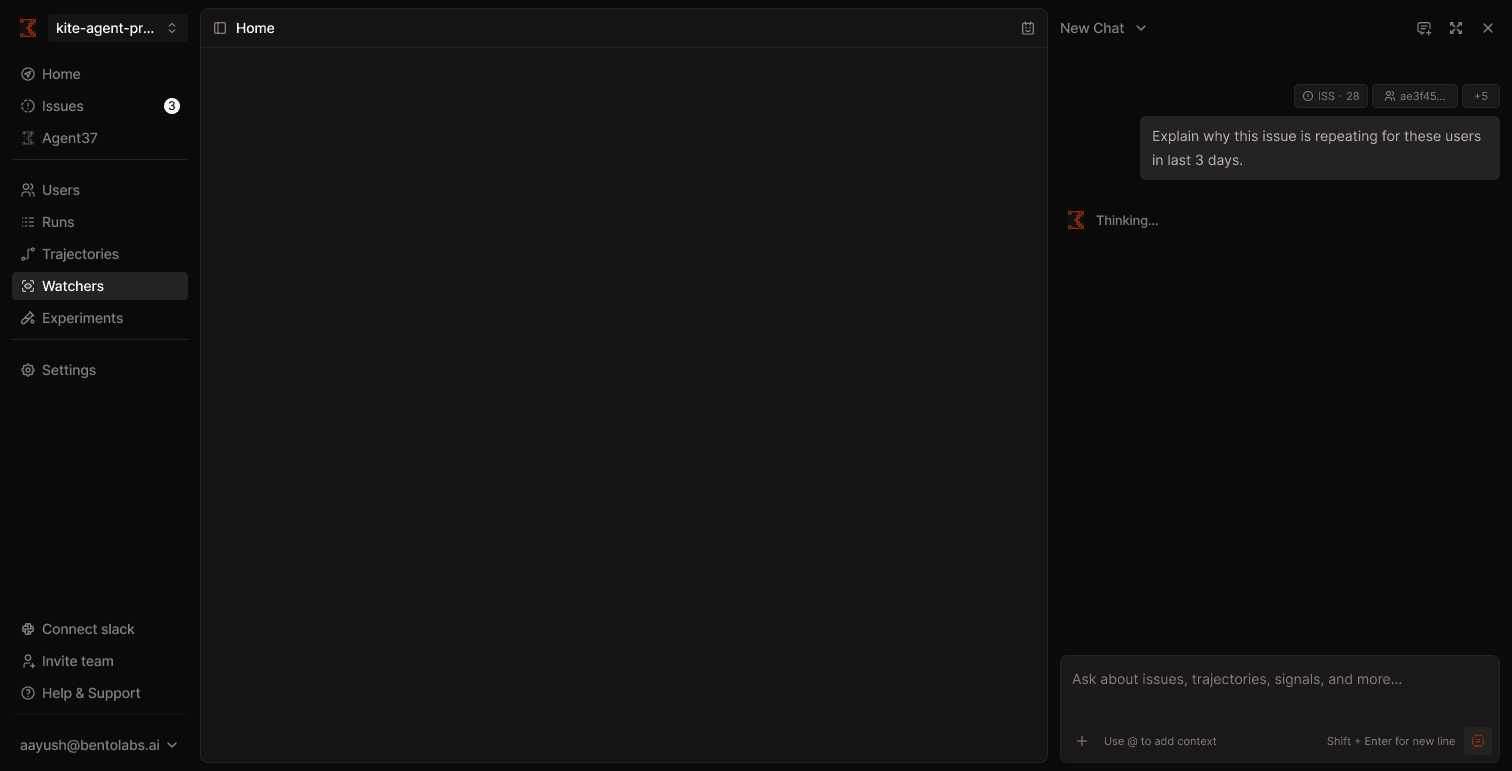
The designs explore both a full-page conversation and a side panel. A dedicated page gives an investigation room to grow. The panel keeps the conversation beside the product, so someone can ask about what they are looking at without leaving it behind.
Attached context also gives the question a visible scope. An issue and a group of users can travel with a message instead of becoming a paragraph of IDs that someone has to copy, check, and explain.
From a recurring issue to a possible fix
Issues gave a failure pattern a name, a priority, and supporting evidence. Agent37 added a way to ask the next question: what connects these failures, and what could we change?
The product goal was to connect investigation with suggestions for fixing the agent. The screens here focus on the interaction that makes that possible: choosing context, asking a question, and keeping the investigation in reach. They show the design work, rather than a measured result from a live customer investigation.
That work also shaped how I think about individual sessions. I wrote more about it in The art of reading traces.